Element 4.12: Use Insurance to Manage Unavoidable Risks
“It Wasn’t Raining When Noah Built the Ark”
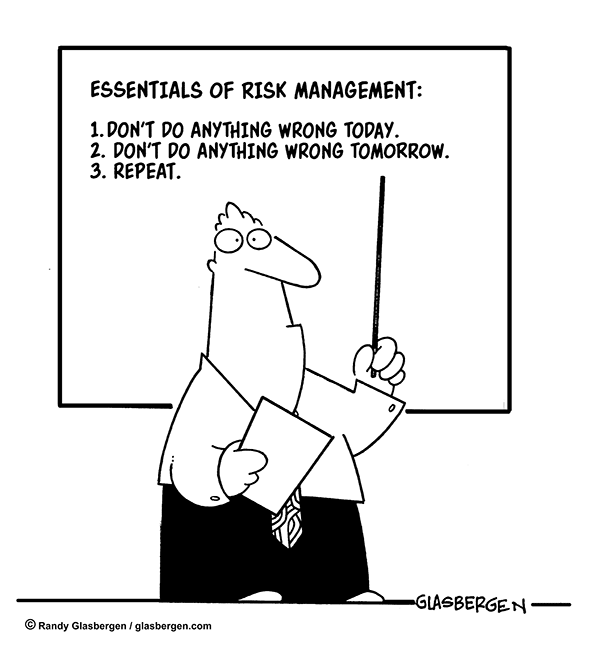
Life involves risks. These may range from small and financially insignificant, like receiving poor service at a restaurant, to large and financially devastating, such as a severe illness or having your home destroyed by a flood or tornado (or even war). While you cannot eliminate risk, you can take steps to reduce and manage it.
You can make choices that will reduce risks. Not texting while driving reduces the chance of being involved in an accident. Wearing a seat belt lowers the chance of injury if you are involved in a collision. Installing smoke detectors and a security system decreases the likelihood of your residence burning down or getting burglarized. Cutting down brush near your home reduces the chances of it being destroyed in a forest fire. Decreasing sugar consumption and eating low-cholesterol foods reduce the chance of illness and disease. While your choices can reduce risk, they can never eliminate it entirely.
How can you manage risk and protect yourself from the most adverse consequences? Insurance can reduce the monetary loss resulting from damage to possessions (such as your home or car), an illness, loss of income, or other harmful events. Insurance provides a way for a group of people to pool payments and share risk to offset the losses of members damaged by an adverse event. The insurance company is an intermediary, or middleman, in the risk-sharing process. The company collects premiums from each member of the group (its policyholders), then disburses payments when a loss that is covered occurs. The principle of sharing risk is often forgotten because the individuals who pay premiums to an insurance company have no interaction with the other group members.
To understand how risk-sharing works, imagine the following situation: You and four associates go to a restaurant for lunch and expect that the total bill will be €200. The five of you agree to tell the server to randomly assign the check to one of you at the end of the meal, and that person will pay the entire amount. You and the other group members can then choose between two options: (1) take a chance, and hope you are not selected to pay the €200 bill; or (2) pay a premium of €40 to an insurer, who will pay the €200 bill if you are selected. Many people will prefer the second option because it is less risky. While you must pay the €40 premium, you protect yourself against the 20 percent possibility of having to pay the entire €200 bill.
Of course, insurers providing the risk-sharing service incur costs. They will have to assess risks, formalize agreements, collect premiums, examine and validate claims, and process payments. These handling and processing costs will have to be covered, in addition to the costs of the risk. Thus, the insurance premiums will need to be higher than the expected costs of the loss. For example, if an insurance company were going to provide members of our lunch group with protection against the 20 percent chance that they might end up with the €200 bill, it would have to charge each a little more than €40, perhaps €44, to have an incentive to offer the service.
Insurance reduces risk because it spreads the burden of unfortunate events that a few people experience over a larger group. In the lunch situation, the €200 bill comes with certainty. The uncertainty comes from not knowing which member of the group will receive it. A larger group will increase the amount of the potential loss but will also reduce the chance of any individual member receiving the bill.
When it comes to large sums, most of us are risk averse, which means we are willing to pay a premium to reduce the adverse consequences of various events. Buying insurance is one way to reduce exposure to risks. Let us say you own a house worth €200,000, and you are worried about the risk of it getting damaged by fire. You could buy home insurance for €1,500 a year. Without insurance, if a fire were to occur and damage your house, you would be responsible for paying the full €200,000 to repair or replace it. But with insurance, if a fire happens, you would only need to pay a deductible (let us say €1,000), and the insurance company would cover the rest of the cost. So, by paying the premium of €1,500 a year, you are reducing your risk exposure from the full €200,000 to just the deductible amount. In this way, you are willing to pay a premium (the insurance cost) to reduce the adverse consequences (the monetary loss) of a potential event (fire damage to your house).
Insurance, however, is not always cost-effective. You should think carefully about whether it makes sense for you to insure against a risk. Yes, you should insure against events that, if they occur, will impose severe financial hardship. A grave illness that prevents you from working for an extended period, a car accident, or a flood that damages your home are examples. Insuring against relatively small adverse events, such as a breakdown of an appliance or television, however, is generally not cost-effective because providing the risk-sharing service will be expensive relative to the potential harm. Thus, it will be more economical to accept these risks and use an emergency fund (see Element 4.6) to plan for and cover the cost of these risks. In contrast, automobile, housing, and healthcare insurance are usually cost-effective. In these cases, the cost of spreading the risks over a group of people is low relative to the potential damage of an adverse event. We now turn to these topics.
Most countries require car owners to maintain some level of automobile insurance. For example, when you register a car in any EU country, you are required to insure it for third-party liability. This mandatory insurance is recognized across all other EU countries. It protects you in case of an accident resulting in damage to property or injury to anyone other than the driver. However, it does not cover additional costs such as repairs to your vehicle. Optionally, you can also buy additional insurance known as first-party liability, which covers a broader range of risks. This extended coverage includes injuries to the driver, damage to your vehicle, theft of your vehicle or its contents, vandalism, and legal assistance. Customers will pay a premium based on several factors. These include the driver’s record, characteristics of the driver, the type of automobile, and the specific coverage limits and deductibles of the policy. A deductible is the amount the customer must pay first before any insurance coverage applies. For example, a €500 deductible means the customer must pay €500 before the insurance policy will pay for a loss. The higher the deductible, the lower the premium. Coverage is the maximum amount the policy will pay in the event of a loss.
An auto policy is typically structured to cover several types of loss. Collision coverage pays for damage to your car in the event of an accident. Comprehensive coverage pays for non-collision damage, such as theft, vandalism, and acts of nature, like a tree branch falling on your car. Liability coverage comes in two forms. First, it pays other people for damage to their person or vehicle caused by the operation of your automobile. Second, it covers damage to you and your passengers for medical expenses and death benefits. For example, liability coverage of €500,000 means the most the insurance will pay in the event of a loss is €500,000, even if the actual loss is greater. When purchasing insurance, you should carefully consider the size of your coverage limits and deductible levels. For example, when choosing the size of your deduction, you will want to consider the degree of hardship imposed on you by payment of the deductible amount if an adverse event should occur.
As just discussed in Element 4.11, housing is often people’s largest investment. It makes sense to insure against the loss of your biggest asset. Like auto policies, housing insurance will have deductibles and coverage limits. Housing insurance typically has three basic kinds of coverage. The first pays for damage to the house and other structures, such as a detached garage or shed. The second pays for damage to the homeowner’s personal property—that is, the items inside the house. The third pays for liability and covers other people who may get injured at your home. As in the case of auto insurance, if you choose a higher deductible, your premiums will generally be lower. You should carefully analyze how much risk you want yourself to bear.
Healthcare insurance can be a complicated issue because of the variety of plans and financing and payment methods available to customers. Some people obtain their insurance through their employers, while others buy directly from insurance companies. Some people pay their total premiums, while others have third parties pay (for example, the government or employer). Plans vary, depending on who pays and what is covered. For example, many EU countries have publicly funded national health systems where healthcare is provided to citizens and legal residents through taxation. In these systems, individuals typically do not need to purchase private health insurance separately, as they are covered by the national health insurance scheme. EU citizens can also benefit from the European Health Insurance Card (EHIC). This card allows citizens of one EU country to receive necessary healthcare services when temporarily visiting another EU country under the same conditions and at the same cost as citizens of that country. In Georgia, for example, the Universal Healthcare Program ensures that all citizens and legally registered residents have access to essential healthcare services. Eligible individuals receive a basic package of healthcare services free of charge, including outpatient care, hospital treatment, emergency services, and some prescription drugs. Additionally, citizens and residents have the option to purchase private health insurance packages from private insurance companies, offering various levels of coverage and additional benefits. The complexities surrounding healthcare insurance and international comparison of systems are beyond the scope of this book, but we want to make a few principles clear.
The payments made for healthcare insurance come in four forms. First, premiums (or taxes) are paid to obtain the coverage offered by the plan. Second, a deductible may apply. Third, there is the copay, which is a fee for a particular service, such as a doctor’s office visit or prescription. Fourth, coinsurance is the percentage of the medical bill the customer must pay. For example, a plan may require the customer to pay 20 percent of the bill for a hospital stay or medical procedure.
Competition in healthcare insurance is generally more restricted than for other forms of insurance, which means consumers will have fewer options available. Also, unlike most other insurance, consumers typically can make changes to their plan only once a year. This makes it more difficult to put together a plan that meets your needs. You may be forced to take some coverage for a period that you do not want or cannot use. Even with these restrictions, you will have to make some choices about how much risk to assume yourself and how much you can share with others.
There are circumstances in which having insurance protection can actually increase the likelihood of a harmful event. This is known as moral hazard. A classic example of moral hazard is when individuals become less cautious after obtaining insurance coverage because they know they will be protected financially in case of loss or damage. Consider the following scenarios. Nina trades in her 12-year-old car and buys the most recent model, which has all the latest technology and safety devices. Since Nina feels safer in the new car, she might drive a little less carefully knowing that her chance of being injured in a collision is lower because of the safety devices. Dom’s mother insists he wear a helmet, knee and elbow pads, and long pants when he rides his skateboard. Emboldened with a sense of security and protection, Dom might attempt more dangerous jumps and maneuvers on his skateboard knowing that an injury is less likely. Ivana has not skied for several years and is not sure how much she remembers. With full health insurance to cover her broken bones, she might dare to challenge the Black Diamond slopes. Without insurance, she might decide to stick with the Blue runs. Under all these scenarios, the risk increases because of the change in behavior from feeling safer.
Moral hazard is not the only complicated issue raised by insurance. Suppose you were lying in a hospital bed with a serious disease and your doctor came to you and said, “There is an operation we could try. If we do it there is a 10 percent chance you will live another six months, but it will cost you €1,000,000.” Let us assume you have that €1,000,000 in the bank so you could pay if you wanted. But, as someone who has learned all about opportunity cost, you might say to yourself, “I have lived a long life and if I do not have that operation the money saved would be enough to allow all four of my grandchildren to go to the college of their choice.” You might rationally decide not to have the operation. Now suppose, instead, the doctor said to you, “Do not worry about the cost. The €1,000,000 will be paid by others in the insurance pool who you do not even know (possible taxpayers who live thousands of kilometers away). It will not cost you a single cent.” Now what would your choice be? But what if everyone thought like you? It is easy to see why countries with generous health insurance systems spend a far greater share of national income on medical treatment at the expense of other priorities. The dilemma of how generous health insurance “ought” to be starkly raises two of the most critical insights of economics: “Incentives Matter” and “There is No Such Thing as a Free Lunch.”
Other types of insurance to consider, but not covered here, include life, disability, and long-term care. After evaluating your personal choices that determine the level of risk in your life, carefully analyze the risks you cannot avoid but can reduce through the effective use of insurance. It makes sense to insure against risks with large potential adverse effects, but when the potential financial damages are small, it is best to either absorb their cost in your monthly budget or cover them from your emergency fund. The most important objective of an insurance strategy is to prevent devastating financial losses.