Element 3.10: Decentralization, Competition and External Anchors Are Key
“The curious task of economics is to demonstrate to men how little they really know about what they imagine that they can design. To the naïve mind … it may seem absurd that in complex conditions, order … can be achieved more effectively by decentralizing decisions.”
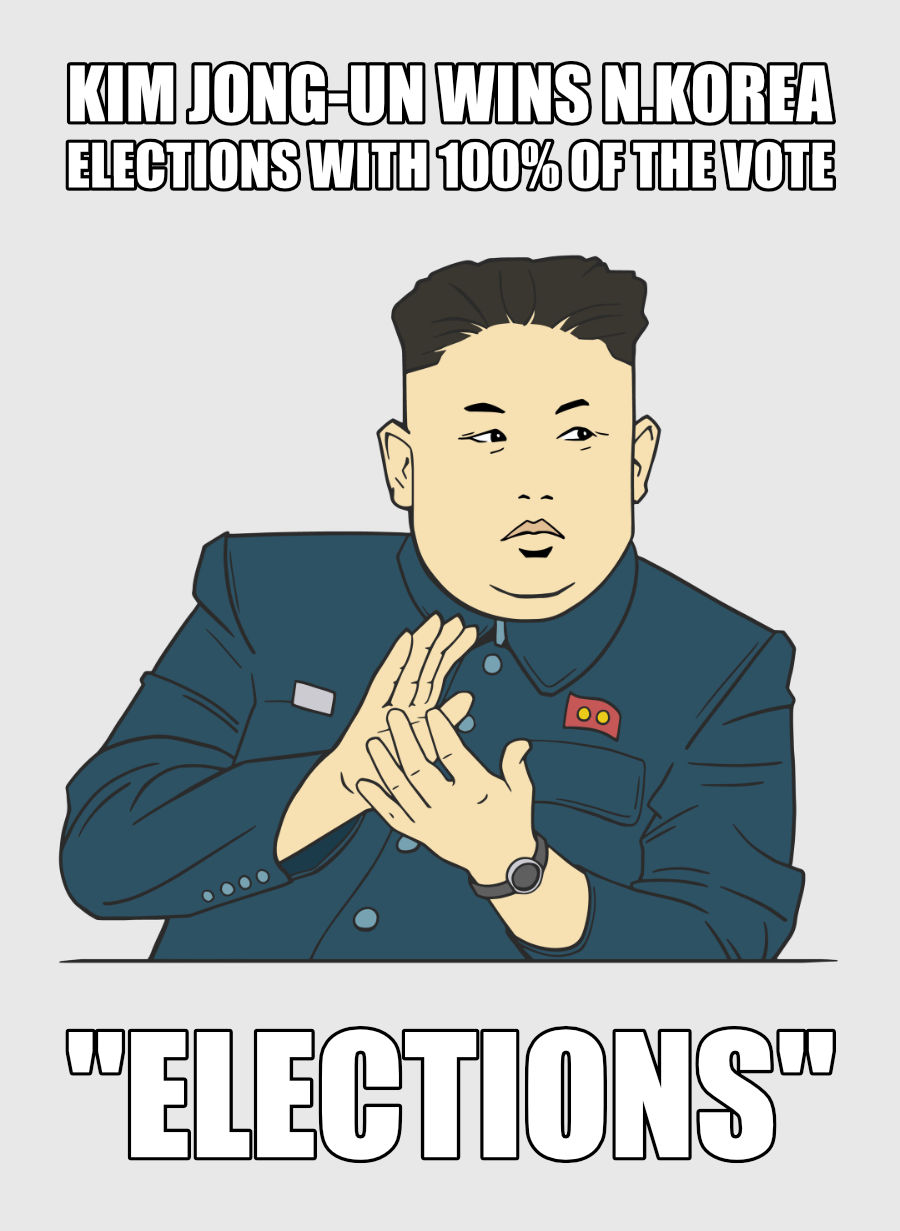
Competition is a disciplinary force. In the marketplace, businesses must compete for the loyalty of customers. Almost everyone recognizes this point regarding the private sector. Unfortunately, the importance of competition in the public sector is often overlooked.
The primary purpose of government is to secure and protect the rights of individuals. A government is granted a monopoly on the legitimate use of force to protect the rights of individuals or other entities such as corporations against those who would use force to threaten, take, or damage the person or property of another. As history illustrates, the coercive powers of government, particularly those of the central government, also pose a potential danger to the rights of individuals. This is why it is generally a good idea for political power to be both limited and divided.
As discussed in the prior element, the structure of incentives confronted by government agencies and enterprises is not very conducive to efficient operation. There is nothing comparable to profits and losses to help citizens evaluate the performance of public sector agencies and enterprises. As a result, managers of government firms can often gloss over economic inefficiency. There is little incentive to control spending. If an agency fails to spend this year’s budget allocation, its case for a larger budget next year is weakened. Agencies typically go on a spending spree at the end of the budget period if appropriations have not yet been spent.
Given the structure of incentives within the public sector, it is vitally important that government faces competition wherever feasible. If we are going to get the most from the available resources, private firms must be permitted to compete on a level playing field with government agencies and enterprises. For example, when governments operate vehicle maintenance departments, printing shops, food services, garbage collection services, street maintenance departments, schools, and similar agencies, private firms can easily be given an equal opportunity to compete with public enterprises, especially if care is exercised to avoid political favoritism or even bribery. Competition can improve performance, reduce costs, and stimulate innovative behavior in government, as well as in the private sector.
One way of promoting competition among governments is to divide horizontally among the executive, legislative, and judicial branches of government. If well-structured, each will provide a check on the power of the other two branches. Political power can also be divided vertically among the central, state or provincial, and local levels of government. Decentralization reduces the power of political leaders, such as presidents, prime ministers, and legislators, who exercise power at the central government level. Decentralization and expansion of the role of state and local governments relative to the central government can help protect citizens from exploitation. This is because it is much easier to escape the oppressive powers of state and local governments than a central government. One can much more easily move to another location within a country to escape high taxes and poor government services than move out of a country. Decentralization makes it easier for citizens to choose the “exit option” and find a location providing government services and taxes more to their liking. In turn, this ability to move enhances the incentives for state and local officials to be more sensitive to the concerns of their residents.
Decentralization increases competitiveness within governments. As we have stressed throughout, competition among business firms protects consumers against high prices, shoddy merchandise, poor service, and rude behavior. When firms serve their customers poorly, they lose business to rivals providing consumers with a better deal. Competition is a disciplinary force, and it can improve performance, reduce costs, and stimulate innovative behavior in government, just as in the private sector.
Decentralization and variations in the activities of state and local governments also can provide citizens with a broader range of options for goods and services offered through the political process, enhancing their ability to obtain government services more consistent with their preferences. Just as people differ regarding how much they want to spend on housing or automobiles, they will also have different views concerning expenditures on public services. Some will prefer higher levels of services and be willing to pay higher taxes for them. Others will prefer lower taxes and fewer government services. Some will want to fund government services with taxes, while others will prefer greater reliance on user charges. Within the framework of a decentralized political system, individuals will be able to group together with others desiring similar combinations of government services and taxes, and this grouping will make it possible for a larger number of people to obtain services more consistent with their preferences.
Moreover, the movement of people among the decentralized governmental units will also help improve efficiency. If a government levies high taxes (without providing a parallel quality of service) and regulates excessively, some individuals and businesses that make up the tax base will choose the exit option.
Nearly 40 million Americans move each year. That’s a lot of moving! Moreover, their movements are not random. Between 2013 and 2022, the populations of the ten states with the highest tax burden—that is, income plus sales (VAT) and property taxes—grew by an average of 3.7 percent as the result of births minus deaths plus immigration from other states and abroad. During the same period, the ten states with the lowest tax burden grew more than twice as fast, 7.7 percent. Changes in employment also provide insight into the pattern of population movements. Among the four most populous states, employment between 2000 and 2022 increased in the low-tax states of Texas and Florida by 41 percent and 36 percent respectively, compared to only 16 percent and 4 percent in the high-tax states of California and New York. These movers are sending a message to high taxing, poorly run governments. Like businesses that realize losses when they fail to serve their customers, democratic governments lose citizens when they serve them poorly.
Similarly, within the European Union, countries where after-tax incomes are a greater proportion of pretax incomes attract significantly larger numbers of foreign high-skilled workers.(116) These movers are sending a message to governments. Like businesses that realize losses when they fail to serve their customers, governments lose citizens when they serve them poorly, unless they use the power of the state to restrict movements, as China does by not allowing those who do not have an urban residence permit (hukou) for a specific city to receive medical care or send their children to school.
In summary, decentralization allows people to move toward governmental units that provide desired public services at a relatively low cost. In turn, the movements of voters will help keep governments in line with the preferences of citizens.
If competition among decentralized governments is going to serve the interests of citizens, however, it must not be stifled by the policies of the central government. When the national government (or the European Union) subsidizes, mandates, and regulates the bundle of services provided by provincial and local governments, it undermines the competitive process among them. The best thing the central government can do is perform its limited functions well and remain neutral regarding the operation and level of services provided by provincial and local governments. Like private enterprises, units of government prefer protection from rivals. There will be a tendency for governments to seek a monopoly position. Therefore, competition among governments does not evolve automatically. It must be incorporated into the political structure.
Is there a country that typifies the idealized decentralization model outlined here? With a population of about 8.8 million Switzerland, a small landlocked country surrounded by European powers comes close. Its geographic size of 41,285 square kilometers is mountainous and little of it is suitable for agriculture.
Despite its small size, the Swiss government is highly decentralized, and political power is divided both horizontally and vertically. There are twenty-six cantons (twenty full cantons and six so-called half cantons) that operate as independent states with substantial powers to restrain the central government. Any eight cantons can call for a popular referendum to repeal an action of the central government. There are two legislative branches of the central government—the Council of States and the National Council. The members of the Council of States are elected by majority vote with two members from each of the twenty full cantons and one from each of the six half cantons. In contrast, the National Council is based on proportional representation. This difference in how members of the legislative branches are elected reduces the power of political parties and makes it more difficult to obtain legislative approval at the central level. In Switzerland, there is no chief executive with powers similar to those of a president or prime minister. The central executive branch is directed by a seven-member council selected by the legislative bodies. The taxing powers of the central government are limited, which explains why more than half of total tax revenue and 80 percent of the income tax revenues are raised at the canton and municipal government levels. Switzerland’s decentralized structure has served it well. Even though it has little in the way of natural resources, it has the highest per capita income among the industrialized countries and ranks among the world’s freest economies.