Element 2.6: Prudent Fiscal Policy
“Taxes are paid in the sweat of every man who labors. . . . If those taxes are excessive, they are reflected in idle factories, in tax-sold farms, and in hordes of hungry people tramping the streets and seeking jobs in vain.”(58)
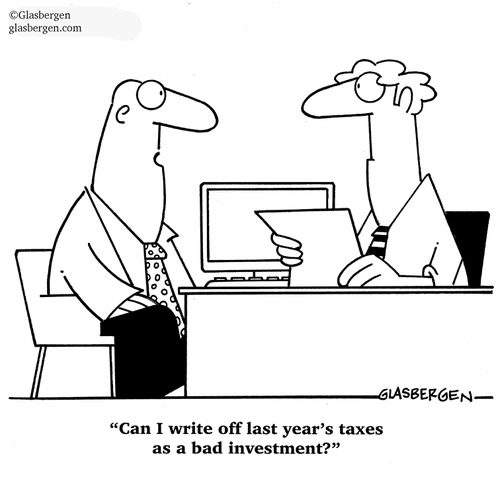
When high tax rates take a large share of income, the incentive to work and use resources productively declines. The marginal tax rate is particularly important. The marginal tax rate is the share of additional income that is taxed away at any given income level. For example, if your marginal tax rate is 25 percent, taxes take 25 percent of any additional funds you earn. You can keep only $75 if you earn an additional $100. If the marginal tax rate rises to 40 percent, you can keep only $60 out of a $100 increase in earnings. As marginal tax rates increase, the share of additional earnings that people take home declines.
There are three reasons why high marginal tax rates reduce output and income. First, they discourage work effort. When marginal tax rates soar to 55 or 60 percent and individuals take home less than half of their additional earnings, some people will respond by working fewer hours, retiring earlier, or taking jobs in places with lower tax rates or taking longer vacations. Some people, perhaps those with working spouses, will respond by leaving the labor force entirely. Still others will be more particular about accepting jobs when unemployed, refuse to move to take a job or to gain a pay raise, or forget about pursuing that promising but risky business venture. Given the high tax rate, these just may not be worth the trouble.
Higher marginal tax rates will even reduce the returns to education, leading to less investment in human capital. High tax rates can even drive a nation’s most productive citizens to move to countries with lower tax rates. Such responses reduce the size and productivity of the workforce, causing output to decline. The marginal tax rates vary across countries. The marginal tax rate in Romania is 10%, in Armenia and Georgia it is 20%, in Poland it is 32% if a taxpayer earns more than 120,000 zloty per year, while in France it is up to 45% for incomes over €177,107 as of 2023.
Of course, most people will not immediately quit work or even work less diligently if their marginal tax rate rises. A person with years of training for a particular occupation will probably continue working—and working hard—especially if that person is in the peak earning years of life. But many younger people who have not already made costly investments in specialized training will be discouraged from doing so because they will get less and less advantage from more income. Thus, some of the negative effects of high tax rates on work effort will be felt in the future, because as young people get older, they will not be as productive as they otherwise would be.
High tax rates will also cause some people to shift to activities in which they are less productive. Suppose, for example, high taxes drive up the prices charged by skilled painters, because they want to make up for the diminishing value of extra pay. Some potential customers will respond by painting their own houses even though they lack the skill to do so efficiently. Without high tax rates, the professional painter would do the job at an affordable cost, allowing homeowner painters to focus their time on work for which they are better suited. Waste and economic inefficiency result from these tax-distorted incentives.
Second, high marginal tax rates reduce both the level and efficiency of capital formation. High tax rates repel foreign investment and cause domestic investors to search for investment projects abroad in countries where both taxes and production costs are lower. This reduces that country’s investment and the availability of productive equipment, which provide the fuel for economic growth. As a result, the growth of workers’ productivity and earnings in the future will be lower.
Third, high marginal tax rates encourage individuals to consume tax-deductible goods in place of nondeductible goods, even though the nondeductible goods may be more desirable. Often they do this by purchasing items for their business, because business expenses are generally tax-deductible. Individuals who purchase them do not bear their full cost, because the expenditure reduces the taxes they would otherwise pay. Taxpayers confronting high marginal tax rates will spend more money on such tax-deductible items as plush offices, extravagant conferences, business entertainment, and company-provided automobiles. Because such tax-deductible expenditures reduce their taxes, people will often buy goods they would not buy if they were paying the full cost. Waste and inefficiency are by-products of high marginal tax rates and the perverse incentives they generate.
The sales of the British-made luxury car Rolls-Royce in the 1970s provide a vivid illustration of this point. During this era, the marginal income tax rates imposed on those with the highest incomes in the United Kingdom soared to 98 percent. A business owner paying that tax rate could, however, buy a car as a tax-deductible business expense, so why not buy an exotic, more expensive car? The purchase would reduce the owner’s profit by the car’s price—say £100,000. However, given the 98 percent marginal tax rate, the £100,000 tax deduction would reduce the owner’s tax liability by £98,000. Thus, the owner’s net cost of the luxury automobile was only £2,000. In effect, the government was paying 98 percent of the car’s costs (through lost tax revenue). When the UK cut the top marginal tax rate to 70 percent, the sales of Rolls-Royces plummeted. After this rate reduction, the £100,000 car now cost the business owner not £2,000 but £30,000. The lower marginal rates made it much more expensive for wealthy Brits to purchase Rolls-Royces, and they responded by purchasing fewer of them.
Reductions in tax rates, particularly high rates, can increase the incentive to earn and improve the efficiency of resource use. The United States has had three major reductions in tax rates: the rate reductions during the 1920s in the aftermath of World War I, the Kennedy tax cuts of the 1960s, and the Reagan tax cuts of the 1980s. All were followed by strong and lengthy expansions in real GDP (output adjusted for inflation).
Another prominent example of a country experiencing significant economic growth following tax reductions is Ireland. During the late 20th and early 21st centuries, Ireland underwent a series of tax reforms that played a crucial role in transforming its economy into one of the fastest-growing in the world, a period often referred to as the "Celtic Tiger" era. Estonia presents another compelling example of a country experiencing significant economic growth following tax reforms, notably its introduction of a flat income tax system and other tax-related innovations in the early 2000s.
Tax rate reductions have also been implemented to spur economic growth in post-communist countries like Georgia and Armenia. Between 2005 and 2008, the Georgian government enacted sweeping reforms to its tax legislation. The 21 different taxes in place in 2004 were streamlined to just 6 by 2005. Starting in 2009, the government simplified taxes further by eliminating the social tax and introducing a single personal income tax, cutting the marginal income tax from 32 percent down to 20 percent. The Armenian government also implemented significant tax reforms in 2020. The personal income tax was reduced to a flat rate of 20% in 2023, down from a progressive system with rates up to 36%. Indeed, transition economies dominate the countries with the lowest top personal income rates in the world. These include Bosnia and Herzegovina, Kazakhstan, Kosovo, Kyrgyzstan, Romania, and Turkmenistan, all of whom have a maximum income tax rate of 10% as of 2024.(59)
In contrast, large tax increases can exert a disastrous impact on the economy. For example, in the late 1970s, the UK faced severe economic challenges. The government, in an attempt to tackle inflation and budget deficit, implemented a series of tax increases. These measures included raising income tax rates to very high levels, with the top rate of income tax reaching 83% on earned income and an astonishing 98% on unearned income (such as dividends and interest).
These high tax rates disincentivized work, investment, and innovation. Many high earners and skilled professionals were discouraged from working harder or investing due to the significant portion of their income taken by the government. The UK experienced capital flight, with businesses and individuals moving their investments abroad to more tax-friendly environments. The economy stagnated, with low growth and high inflation persisting. The tax burden contributed to a lack of economic dynamism and reduced the overall competitiveness of the British economy. The economic frustration culminated in the Winter of Discontent of 1978-1979,(60) marked by widespread strikes and public sector unrest due to dissatisfaction with pay caps, high taxation, and deteriorating public services. The situation ultimately led to significant political and economic reforms in the 1980s under Prime Minister Margaret Thatcher, who implemented policies to reduce tax rates, deregulate the economy, and encourage private enterprise.
As a second example, the tax policy in the United States during the Great Depression underscores the detrimental impact tax increases can have on the economy. Seeking to reduce the federal budget deficit in 1932, the Republican Hoover administration and the Democratic Congress passed the largest peacetime tax rate increase in the history of the United States. The lowest marginal tax rate on personal income was raised from 1.5 percent to 4 percent. At the top of the income scale, the highest marginal tax rate was raised from 25 percent to 63 percent. Essentially, personal income tax rates were more than doubled in one year! This huge tax increase reduced the after-tax income of households and the incentive to earn, consume, save, and invest. The results were catastrophic. In 1932, real output fell by 13 percent, the largest single-year decline during the Great Depression era. Unemployment rose from 15.9 percent in 1931 to 23.6 percent in 1932. Just four years later, the Roosevelt administration increased taxes again, pushing the top marginal rate to 79 percent in 1936. Thus, during the latter half of the 1930s, high earners were permitted to keep only 21 cents of each additional dollar earned. (It is interesting to contrast the words of candidate Roosevelt presented at the top of this element with the tax policy followed during his presidency.) Several other factors, including a huge contraction in the money supply and a large increase in tariff rates, contributed to both the severity and length of the Great Depression. But it is also clear that the tax increases of both the Hoover and Roosevelt administrations played a major role in this tragic chapter of American history.(61)
Income taxes (both personal and corporate) are not the only taxes that can distort incentives and affect how well an economy operates. The World Bank's Doing Business Index assesses the regulatory environment and its impact on business operations across 190 countries. A critical component of this index focuses on measuring the tax burden faced by companies, evaluating both the direct financial impact of tax rates and the administrative complexity of tax compliance. This aspect of the index examines the total number of taxes paid, the methods of payment, the time spent on tax compliance, and the overall rate at which profits are taxed.(62)
For 2019, the most tax-friendly countries include some we would expect to find, such as Hong Kong, Singapore, New Zealand, Ireland, and Finland (plus some small Persian Gulf states where oil revenues mean almost no taxes on firms). The worst performers also seem about right and include Venezuela, Somalia, Bolivia, Chad, and the Central African Republic. Among post-communist countries, the least-burdensome tax systems are found in Estonia (ranked 12th), Georgia (14th), Latvia (16th), and Lithuania (18th).(63) The average transition economy ranked 67th, about the same as Greece, surely not a model to be emulated. These numbers can be reconciled with the low personal income tax rates discussed above because income taxes are not the only taxes governments impose. Others include value added (sales) taxes, social insurance taxes, estate (death) and corporate income taxes.
The disincentive effects of high marginal tax rates are not just an issue for those with high earnings. Many people with relatively low incomes also face high implicit marginal tax rates. We call them “implicit” because they include both additional taxes and the loss of transfer benefits as income increases. For example, suppose that an individual’s income increases from $20,000 to $30,000 and, as a result, income and payroll taxes take 30 percent of the additional earnings. Further, because of this increase in income, the individual loses $5,000 in benefits from food subsidies, free or low-cost medical care, child care benefits and other transfer programs. As a result, the individual confronts an implicit marginal tax rate of 80 percent! Thirty percent comes in the form of a higher tax bill, and an additional 50 percent comes from lost transfer benefits. People in this position who earn an additional $10,000 get to keep only 20 percent of it. Obviously, this will substantially reduce their incentive to earn and make it more difficult to move up the income ladder. We will return to this issue in Part 3, Element 3.8, when examining the impact of transfer programs on the poverty rate.
In summary, economic analysis indicates that high tax rates, including implicit rates reflecting the loss of transfer benefits, are detrimental. They reduce productive activity, impede both employment and investment, and promote wasteful use of resources. They are an obstacle to prosperity and the growth of income. Moreover, large increases in tax rates during a period of negative or anemic growth can exert a disastrous impact. Thus, if we are going to get the most from our resources, tax rates, particularly marginal tax rates, need to be kept low.